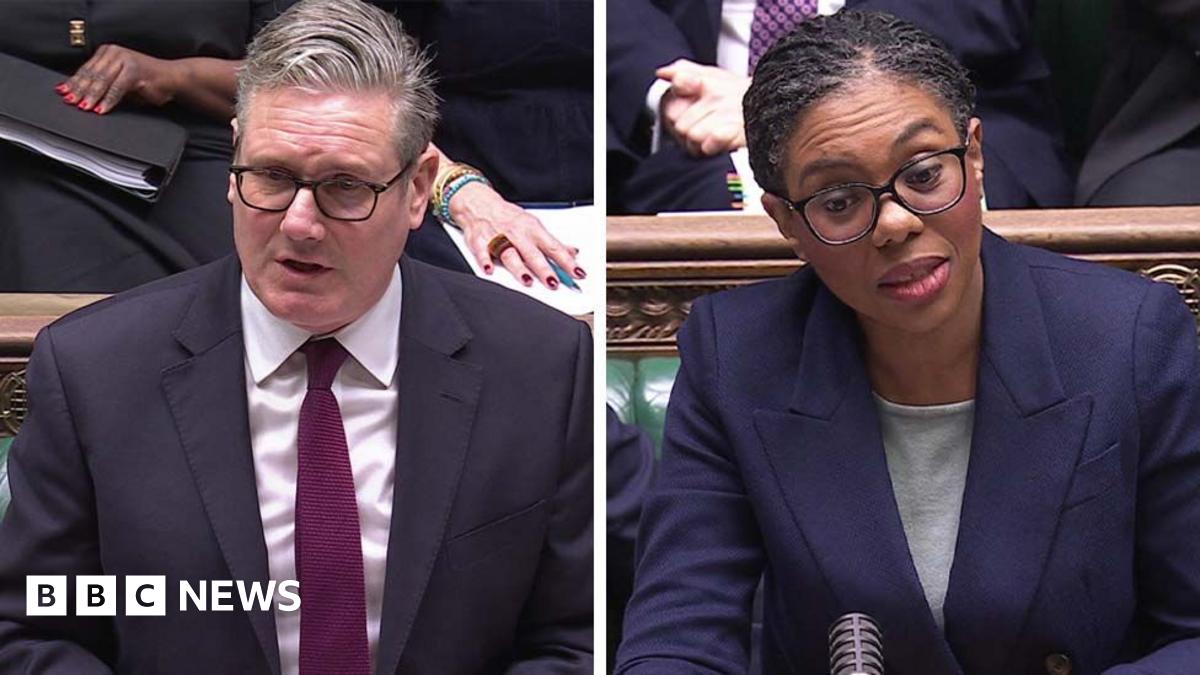
Badenoch Challenges Starmer's Leadership Amidst Mandelson and "British Values" Controversies
The political arena frequently stages intense confrontations, and recent weeks have seen Kemi Badenoch, a prominent Tory minister, emerge as a formidable challenger to Keir Starmer's leadership. From a contentious appointment to a divisive debate over "British values," Badenoch has consistently pressed the Labour leader, shining a spotlight on issues that resonate deeply within public discourse. These confrontations, particularly during Prime Minister's Questions (PMQs), highlight the sharp ideological and strategic differences between the two parties, offering a glimpse into the ongoing battle for public trust and the definition of national identity.
The exchanges have been far from cordial, with Badenoch relentlessly pursuing accountability on the appointment of Lord Mandelson and Starmer robustly challenging remarks made by a Conservative-aligned figure regarding Muslim prayers. This article delves into these key flashpoints, examining the substance of the challenges, the responses, and the broader implications for both Starmer's leadership and the Conservative party's positioning.
The Mandelson Affair: A Test of Starmer's Accountability
One of the most persistent lines of attack from Kemi Badenoch against Keir Starmer has centred on the controversial appointment of Lord Mandelson as US ambassador. At PMQs, Badenoch repeatedly pressed Starmer on a critical question: did he speak to Lord Mandelson about his relationship with convicted sex offender Jeffrey Epstein before the ambassadorial appointment? This line of questioning underscores a fundamental principle of governance: the due diligence and integrity expected in high-level public appointments, especially when individuals may have past associations that could invite scrutiny.
Starmer's response has been consistent, describing the appointment as a "mistake" and reiterating his apology to Epstein's victims. However, for many on the Conservative benches, this explanation falls short of addressing the core issue of prior knowledge and transparency. Shadow Environment Secretary Victoria Atkins articulated this sentiment, suggesting it was "frankly crazy" for a Prime Minister not to personally interview a candidate for such a pivotal diplomatic role. The implication is clear: a failure to conduct thorough background checks or engage directly with the candidate on potentially damaging associations could be seen as a serious lapse in judgment or leadership.
Conversely, Justice Minister Jake Richards defended the process, cautioning against a Prime Minister who might "storm out, make broad statements and not respect the due process." This suggests a desire to uphold established protocols, even if those protocols are later deemed imperfect. However, Conservative MP Andrew Snowden criticised Starmer's evasiveness, accusing him of providing "pre-scripted nonsense that bears no resemblance to the questions he's asked." Snowden pointed out Starmer's tendency to pivot to other topics – such as the war in the Middle East or protests in London – rather than directly answer questions about his personal interactions with Mandelson regarding Epstein. This evasion, in Snowden's view, raises suspicions: "What is he scared of? What is he hiding?" The Mandelson controversy, therefore, not only questions Starmer's decision-making but also his willingness to be fully transparent, providing a fertile ground for criticism from Tory minister Kemi Badenoch and her colleagues. For a deeper dive into this specific challenge, read our related article: Starmer Grilled at PMQs: Mandelson, Epstein, and Accountability Questions.
The Art of Due Diligence in Public Appointments
- Thorough Vetting: For any high-level position, especially one involving international diplomacy, comprehensive background checks are paramount. This includes financial, professional, and personal histories.
- Direct Engagement: Leaders should personally interview and challenge candidates on any potential controversies or conflicts of interest.
- Transparency: While not all details can be made public, a commitment to transparency in the appointment process helps build public trust and preempts future scrutiny.
- Risk Assessment: Evaluate potential political and reputational risks associated with a candidate, weighing them against their qualifications.
Clash Over "British Values": Nick Timothy's Comments and Badenoch's Defense
Beyond the corridors of power and diplomatic appointments, a different kind of ideological battle has unfolded, sparking a heated debate about "British values" and religious freedom. The controversy began with comments made by Nick Timothy, a figure closely associated with the Conservative party, who described an event attended by the Mayor of London that included Muslim prayers as an "act of domination." This statement immediately drew strong condemnation from Keir Starmer, who suggested such remarks indicated a fundamental problem within the Conservative party regarding its stance on Muslims.
Starmer's criticism was sharp, framing Timothy's comments as divisive and unrepresentative of a tolerant society. However, Kemi Badenoch stepped in to defend Timothy, reframing his remarks not as an attack on Muslims, but as an act of "defending British values." This counter-narrative positions the debate on complex terrain, where the interpretation of national values becomes a battleground. What constitutes "British values" itself becomes subjective, with different political figures asserting their own definitions.
Badenoch's defence, delivered as a prominent Tory minister, highlighted a significant ideological divide. For Starmer, an attack on religious practices, particularly those of a minority group, undermines the inclusive fabric of British society. For Badenoch, the defence of Timothy's comments potentially signals a stance against what some Conservatives might perceive as challenges to traditional secular norms or a perceived overreach of religious expression in public life. This clash reflects a broader societal tension between multiculturalism and a more singular national identity, and how political leaders choose to navigate this can have profound implications for social cohesion. To delve deeper into this particular controversy, our related article provides more context: Starmer Slams Tory Minister for Anti-Muslim Remarks; Badenoch Defends.
Leadership Styles Under Scrutiny: Starmer vs. Badenoch
The confrontations between Kemi Badenoch and Keir Starmer at PMQs and beyond offer a compelling study in contrasting leadership styles. Badenoch, as a leading Tory minister, has consistently adopted an assertive, probing approach. Her questions are often direct, persistent, and aimed at exposing perceived weaknesses or evasions in Starmer's responses. This style is designed to project strength, confidence, and a relentless pursuit of accountability, potentially winning "brownie points" with her own party leader, as Andrew Snowden observed.
Starmer, in turn, has largely maintained a more measured and often cautious approach. While he has been quick to condemn comments he deems unacceptable, such as Timothy's, his responses to direct questions, particularly regarding the Mandelson affair, have been characterised by a reliance on established processes and repeated apologies rather than detailed personal accounts. This can be interpreted in several ways: as a commitment to due process, as a disciplined adherence to prepared statements, or, as critics like Snowden suggest, as a form of evasiveness designed to avoid uncomfortable truths. The accusation of coming to the House with "pre-scripted nonsense" points to a perception that Starmer sometimes prioritises political messaging over direct engagement with the substance of the questions.
The effectiveness of these styles is often judged by public perception and media scrutiny. Badenoch's confrontational approach can be seen as energetic and decisive, appealing to voters who desire strong opposition. Starmer's more reserved demeanour might be viewed as calm and considered by some, but as lacking directness and conviction by others. Ultimately, both leaders are performing for multiple audiences: their parliamentary colleagues, the media, and the wider electorate, each hoping to define the narrative and project a leadership image that resonates.
The Broader Political Landscape: Implications for Future Elections
The ongoing clashes between Kemi Badenoch and Keir Starmer are more than just parliamentary sparring; they are strategic manoeuvres with significant implications for the broader political landscape and future electoral contests. For the Conservatives, Badenoch's assertive challenges serve multiple purposes. Firstly, they aim to dent Starmer's carefully cultivated image as a serious, competent leader, highlighting perceived vulnerabilities in his judgment and accountability. By constantly raising issues like the Mandelson appointment, the Conservatives seek to sow doubt in the public's mind about Labour's readiness for power.
Secondly, Badenoch's defence of "British values" in the face of what she perceives as cultural challenges aims to rally conservative voters and define clear ideological battle lines. This approach targets specific segments of the electorate who may feel that traditional values are under threat, positioning the Conservative party as their staunch defender. As a prominent Tory minister, Badenoch plays a crucial role in shaping this narrative and energising the party's base.
For Starmer, navigating these challenges requires a delicate balance. He must appear strong and decisive without alienating potential voters with an overly aggressive stance. His apologies regarding Mandelson are an attempt to draw a line under the issue, while his condemnation of Timothy's remarks aims to project an image of inclusivity and tolerance. How effectively he manages these controversies – by demonstrating accountability, clarity, and genuine leadership – will be critical in convincing the electorate that Labour offers a credible alternative to the current government. These high-stakes political exchanges are not merely about winning a daily news cycle but about building momentum and shaping perceptions in the long campaign towards the next general election.
The intense scrutiny faced by both Keir Starmer and Kemi Badenoch underscores the demanding nature of modern politics. From questions of personal judgment in high-profile appointments to fundamental debates over national identity, these ongoing controversies serve as powerful tests of leadership. As the political landscape continues to evolve, the ability of both the Labour leader and the challenging Tory minister to articulate their visions, defend their actions, and ultimately connect with the electorate will determine the course of future political power.