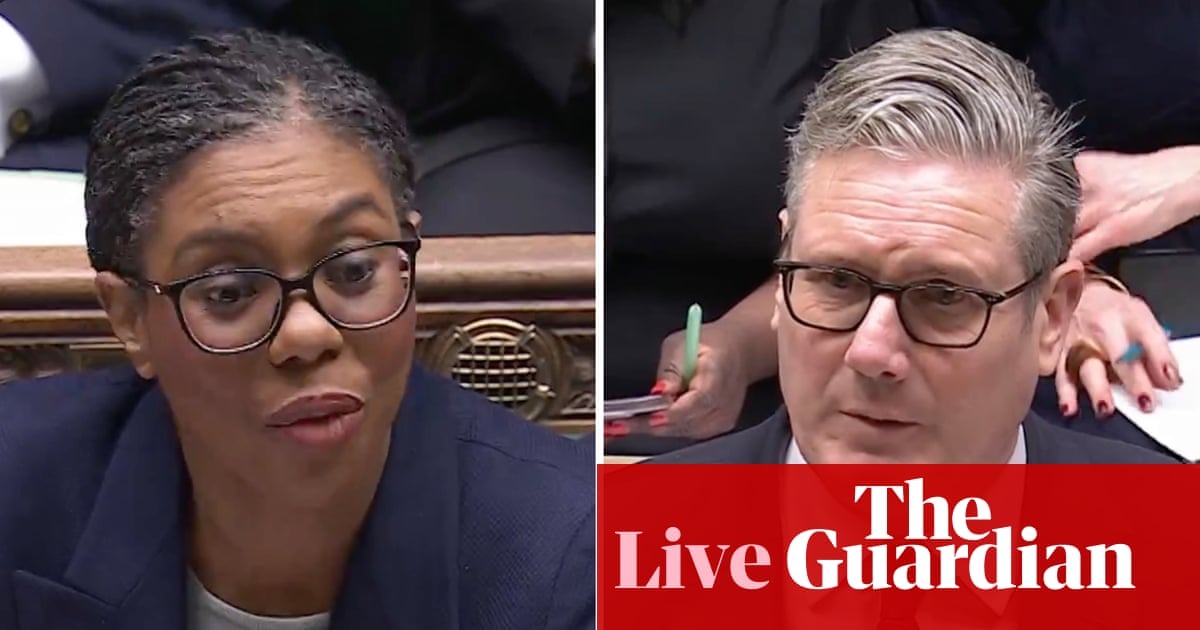
Intense Scrutiny at PMQs: Mandelson, Epstein, and the Quest for Accountability
Prime Minister's Questions (PMQs) often stands as the crucible of British politics, a weekly gladiatorial contest where the government's policies and leaders face relentless scrutiny from the opposition. Recently, the chamber has been ablaze with fierce exchanges, primarily focusing on Prime Minister Keir Starmer's judgment regarding a controversial appointment and broader questions of party values. Leading the charge has been Kemi Badenoch, the Tory leader, who has persistently pressed the Prime Minister on sensitive issues, highlighting the enduring demand for accountability in public office. The intensity of these sessions underscores the critical role of opposition in holding power to account, revealing the fault lines in political discourse and leadership styles.
The Mandelson-Epstein Controversy: A Diplomatic Blunder?
At the heart of recent PMQs sessions was the contentious appointment of Lord Peter Mandelson as the US ambassador, an issue that has become a significant source of political discomfort for Prime Minister Starmer. Tory leader Kemi Badenoch repeatedly cornered Starmer, demanding to know whether he had personally spoken to Lord Mandelson about his association with convicted sex offender Jeffrey Epstein before offering him the high-profile diplomatic role.
The Prime Minister acknowledged the appointment as a "mistake" and reiterated his apology to Epstein's victims, but this admission did little to quell the opposition's pursuit of further answers. The core of Badenoch's questioning revolved around the vetting process – or perceived lack thereof – for such a crucial position. Victoria Atkins, a prominent Tory Shadow Minister, articulated the incredulity felt by many, stating, "The idea that the prime minister of the UK would not interview the person that they are proposing to send to Washington on behalf of the UK is frankly crazy." This sentiment highlights a fundamental expectation for due diligence in senior public appointments, particularly when an individual's past associations could impact the nation's international standing.
The government's defence, offered by Justice Minister Jake Richards, centred on the importance of "due process," suggesting that a prime minister should not "storm out, make broad statements and not respect the due process." However, this procedural defence often failed to satisfy the persistent calls for transparency regarding Starmer's direct involvement and knowledge concerning Mandelson's links to Epstein. The appointment sparked concerns not only about the judgment exercised by the Prime Minister but also about the integrity of the diplomatic service itself. For more detailed insights into this specific challenge, explore
Badenoch Challenges Starmer's Leadership and Mandelson Controversy.
Beyond Mandelson: Broader Questions of Leadership and Party Values
The Mandelson controversy was not an isolated incident; it served as a springboard for broader attacks on Prime Minister Starmer's leadership and the values perceived to be held by his government. Conservative MP Andrew Snowden delivered an impassioned critique, accusing the Prime Minister of bringing "pre-scripted nonsense that bears no resemblance to the questions he's asked." Snowden pointed out that when repeatedly pressed on Mandelson, Starmer deflected by discussing issues ranging from the war in the Middle East to protests in London, leading Snowden to ask pointedly, "What is he scared of? What is he hiding?" This line of attack aimed to portray Starmer as evasive and lacking in direct accountability.
Adding another layer to the ideological battle, an earlier PMQs session saw Starmer himself turn the tables on the Conservatives, criticising a senior Tory politician, Nick Timothy, for comments that suggested an event involving Muslim prayers was an "act of domination." Starmer argued that such remarks indicated a deeper problem within the Conservative Party regarding its relationship with Muslim communities. In response, Tory leader Kemi Badenoch defended Timothy, asserting that he was merely "defending British values." This exchange underscores the ongoing debate over cultural sensitivity, religious freedom, and what constitutes "British values" in contemporary politics. It also highlights the way "starmer tory minister" interactions frequently delve into fundamental ideological differences, moving beyond immediate policy into the realm of identity and values. For a deeper dive into this specific controversy, read
Starmer Slams Tory Minister for Anti-Muslim Remarks; Badenoch Defends.
These instances reveal a pattern of aggressive questioning from the Tory benches, challenging Starmer not just on specific decisions but on his perceived leadership qualities, transparency, and the underlying principles of his administration.
The Dynamics of PMQs: Evasion, Pressure, and Political Point-Scoring
Prime Minister's Questions is a unique institution, often described as a theatre where political reputations are made and broken. The recent exchanges between Prime Minister Starmer and Tory leader Kemi Badenoch perfectly illustrate this dynamic. The opposition's strategy is consistently to apply pressure, repeating questions to highlight perceived evasiveness and to chip away at the government's credibility.
Key aspects of this dynamic include:
- Persistent Questioning: As seen with Badenoch and Snowden, the opposition will return to a thorny issue repeatedly, hoping to break through any defensive lines and force a more direct answer. This tactic aims to create a narrative of the Prime Minister being "on the run" or "hiding something."
- Strategic Deflection: Prime Ministers often employ deflection, changing the subject, attacking the opposition's record, or focusing on broader policy achievements rather than directly addressing a specific point of criticism. Starmer's responses, frequently referring to the "process being set out" or shifting to other topics, exemplify this.
- Theatrical Elements: The applause, heckling, and pointed rhetorical questions are all part of the PMQs spectacle. Andrew Snowden's dramatic query, "What is he scared of? What is he hiding?" is a prime example of using emotion and rhetoric to amplify a political attack.
- Impact on Public Perception: While much of PMQs is aimed at a political audience, the performance also shapes public perception. A Prime Minister perceived as evasive can erode trust, while a strong performance by a Tory minister can enhance their standing within their party and with the electorate.
For leaders, navigating PMQs requires a delicate balance of firmness, policy knowledge, and rhetorical skill. From a governance perspective, the focus on accountability, particularly in high-profile appointments, remains paramount. Public expectations demand not just competence but also integrity and a willingness to transparently address concerns, especially when they involve sensitive issues like associations with convicted individuals. Practical advice for any leader facing such scrutiny would include meticulous vetting processes for all key appointments, clear and consistent communication, and a willingness to confront difficult questions head-on, rather than relying solely on procedural explanations.
Conclusion: The Enduring Pursuit of Accountability
The recent Prime Minister's Questions sessions, marked by intense exchanges between Prime Minister Starmer and Tory leader Kemi Badenoch, have vividly underscored the relentless pursuit of accountability in British politics. From the controversial Mandelson appointment and its links to Jeffrey Epstein, to the broader debates on leadership style and party values exemplified by the remarks of a Tory minister, the themes of transparency, judgment, and ethical governance have dominated the parliamentary stage. While Starmer described the Mandelson appointment as a "mistake" and offered apologies, the opposition's persistent questioning highlighted the public expectation for rigorous vetting and forthright answers from those in power. These parliamentary battles are more than just political point-scoring; they are a fundamental mechanism through which the government is held to account, ensuring that leaders remain answerable for their decisions and the principles guiding their administration. As the political landscape continues to evolve, the demand for clear, honest, and accountable leadership will undoubtedly remain at the forefront of public discourse.